If your skin were a building, collagen would be the steel frame. Not the paint. Not the windows. Not the decorative facade. The structure that holds everything up.
Collagen is the most abundant protein in the human body. It accounts for roughly 75–80% of the dry weight of your skin. It’s what gives your face its firmness, its resilience, its ability to bounce back when you press on it. And starting around age 20, you begin losing approximately 1% of it per year.
That doesn’t sound like much. But it compounds. By 30, you’ve lost 10%. By 40, 20%. By 50, you’re operating on roughly half the collagen production capacity you had at your peak. And the visible consequences of that decline are exactly what most people mean when they say their face is “aging.”
Sagging. Loss of definition along the jawline. Fine lines that deepen into wrinkles. Skin that looks thinner, less full, less alive. That’s not “getting old.” That’s collagen loss.
What Collagen Actually Is
Collagen isn’t one thing. There are at least 28 types that have been identified, but for your skin, two matter: Type I and Type III. Together, they make up about 95% of the collagen in your dermis, the structural layer underneath the visible surface.
Type I collagen forms thick, tightly bundled fibers that provide tensile strength. It’s what makes skin firm. Type III forms thinner, more flexible fibers that provide elasticity. It’s what makes skin resilient. In young skin, these two types work together in a dense, organized mesh. The mesh is the scaffolding.
Collagen is synthesized by cells called fibroblasts, which live in the dermis. Fibroblasts are essentially your skin’s construction crew. They produce new collagen fibers, secrete them into the extracellular matrix, and maintain the structural integrity of the tissue. When fibroblasts are active and well-supported, collagen is produced continuously and the scaffolding stays strong.
The problem is that fibroblasts slow down with age. They become less responsive. They produce less collagen. And they become increasingly surrounded by fragmented, broken collagen fibers that actually interfere with their function. It’s a feedback loop: less collagen leads to more fragmentation, which leads to less fibroblast activity, which leads to even less collagen.
How Collagen Gets Destroyed
In Chapter 2, we introduced MMP enzymes. Now let’s look at them more closely, because they’re the primary antagonist in the collagen story.
MMP1, also called collagenase, is an enzyme whose specific function is to cleave collagen fibers. In healthy, young skin, MMP1 activity is minimal and tightly regulated. There’s a balance between collagen production and collagen degradation that keeps the scaffolding stable.
UV exposure destroys that balance. When UV radiation hits your skin, it triggers a signaling cascade that massively upregulates MMP1 production. A single episode of significant sun exposure can increase MMP1 levels for days. Chronic sun exposure keeps MMP1 elevated continuously. The enzyme is literally cutting through your collagen fibers faster than your fibroblasts can replace them.
And here’s the critical detail: once a collagen fiber is cleaved by MMP1, it cannot be repaired. The fragments are cleared away by the body and replaced only if new collagen is synthesized. There is no mechanism for reassembling a broken collagen fiber. You have to build new ones from scratch.
This is why sun damage is cumulative and largely irreversible at the structural level. Every day of unprotected UV exposure generates MMP1 activity that fragments collagen you’ll never get back. The damage doesn’t show up immediately. It accumulates quietly over years, and by the time you see it in the mirror, the structural deficit is already significant.

The Collagen Supplement Question
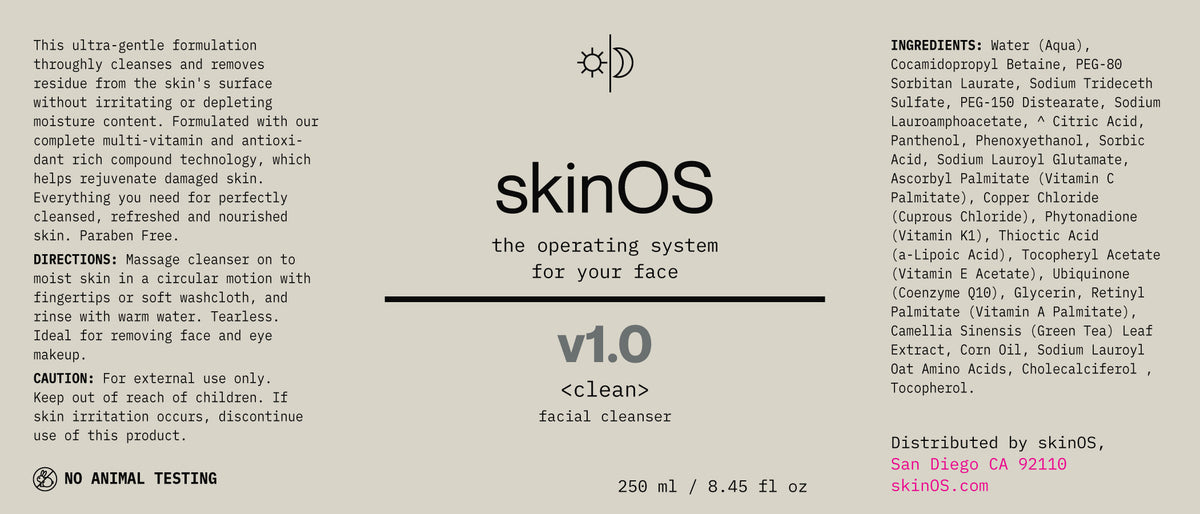
You’ve seen the products. Collagen powder. Collagen gummies. Collagen water. Collagen peptides in your morning coffee. It’s a massive market built on a simple premise: eat collagen, get more collagen in your skin.
The reality is more complicated.
When you ingest collagen, your digestive system breaks it down into its constituent amino acids: glycine, proline, hydroxyproline. These amino acids enter your bloodstream and are available for use throughout the body. The problem is that your body decides where to allocate them based on systemic priority, not your skincare goals. Collagen is needed in joints, bones, tendons, blood vessels, and organs. Your skin is not at the top of the priority list.
The clinical evidence for oral collagen supplementation improving skin is limited and mixed. Some small studies have shown modest improvements in skin hydration and elasticity. Others have shown no significant effect. The studies that show positive results are often funded by supplement manufacturers and use self-reported measures. The evidence base is nothing close to what exists for topical retinoids.
That doesn’t mean collagen supplements are worthless. It means they’re unproven relative to the alternatives. If you’re choosing where to put your money, topical retinol has dramatically stronger clinical evidence for stimulating collagen synthesis in skin specifically.
What Actually Rebuilds Collagen
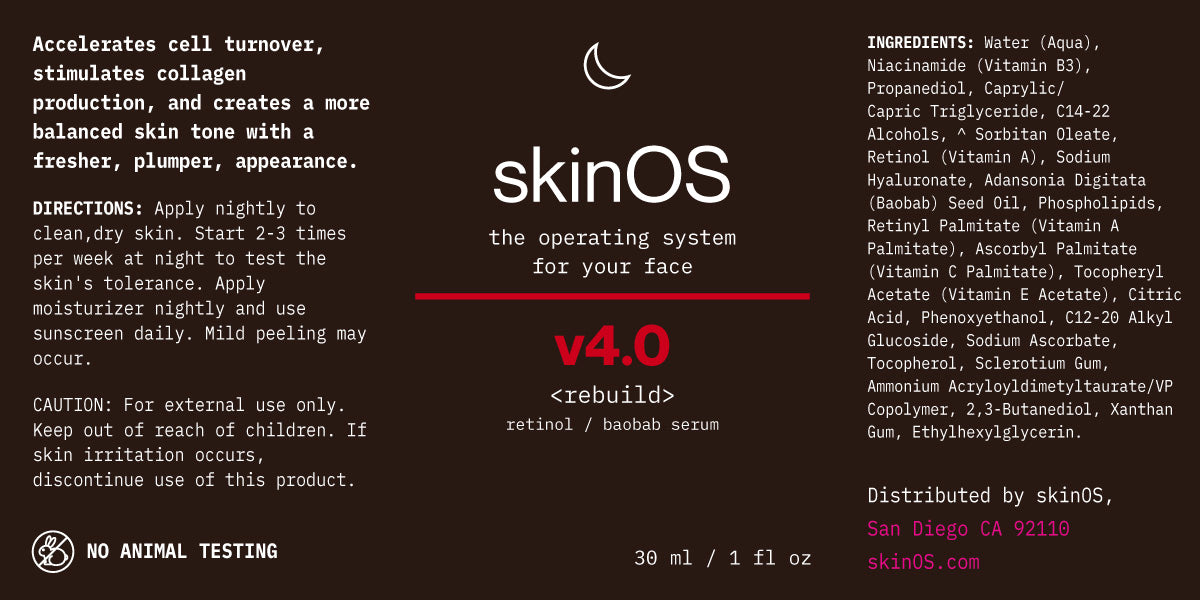
This is where retinol enters the story. And it’s not a small player. Retinol is arguably the most important ingredient in the entire skincare discussion.
Retinol is a form of vitamin A. When applied to the skin, it’s converted through a two-step process into retinoic acid, the biologically active form. Retinoic acid binds to specific nuclear receptors in your cells called RAR (retinoic acid receptors) and RXR (retinoid X receptors). When activated, these receptors function as transcription factors, meaning they directly influence which genes are turned on or off.
The genes that retinol activates include those responsible for collagen I and collagen III synthesis. It literally tells your fibroblasts to produce more collagen. Multiple clinical studies have demonstrated that topical retinol application results in measurable increases in collagen production, increased epidermal thickness, and improved skin texture and firmness.
But retinol doesn’t just play offense. It also plays defense. Retinoic acid inhibits the production of MMP enzymes, including MMP1. So while it’s telling your fibroblasts to build more collagen, it’s simultaneously telling the enzymes that destroy collagen to stand down.
Offense and defense. Production up, destruction down. That’s why retinol has been called the single most important topical ingredient in dermatology. Not by marketers. By the researchers who study it.
The first retinoid (tretinoin, a prescription-strength form) was FDA-approved as an anti-wrinkle treatment decades ago. It remains the only topical ingredient with that level of regulatory validation. OTC retinol is a step milder than tretinoin, but clinical studies show it produces comparable results over a slightly longer timeline, typically 12 weeks of consistent use.
The Supporting Cast
Retinol doesn’t work in isolation. Collagen synthesis requires cofactors and a supportive environment. Two ingredients play critical supporting roles:
Vitamin C (L-ascorbic acid): Vitamin C is a required cofactor in collagen synthesis. Without it, the enzyme prolyl hydroxylase cannot properly stabilize collagen molecules, and the resulting fibers are structurally weak. This is why severe vitamin C deficiency (scurvy) causes connective tissue breakdown. Topical vitamin C ensures the local environment has what it needs for robust collagen production. It also provides antioxidant protection against the UV-generated free radicals that trigger MMP activation in the first place.
Hyaluronic acid: Collagen fibers exist within a hydrated matrix. Hyaluronic acid is the primary molecule responsible for maintaining that hydration. When the matrix is dehydrated, collagen fibers become more prone to mechanical damage and enzymatic degradation. Maintaining hydration with topical HA creates the environment where collagen repair can occur most effectively.
Retinol builds the new scaffolding. Vitamin C ensures the scaffolding is structurally sound. Hyaluronic acid keeps the construction site hydrated. And SPF prevents the MMP demolition crew from tearing down your work while you sleep.
That’s the collagen story. It’s not mysterious. It’s not complicated. It’s structural biology, and the interventions are well-documented.
Why This Matters for You
If you’re a man between 30 and 50, your collagen situation looks like this: production is declining, MMP activity from accumulated sun exposure is elevated, and you probably haven’t been doing anything to address either side of the equation. That’s not a judgment. That’s the baseline for most men.
The good news is that the lower the baseline, the more dramatic the improvement when you intervene. Men who start a retinol-based routine at 40 after decades of doing nothing often see faster visible results than people who’ve been using products since their twenties. There’s more room to improve.
But collagen is only one part of the system. There’s another layer of your skin that most men are actively damaging every single morning without realizing it. It’s called the skin barrier, and if yours is compromised, nothing else you apply will work the way it should.
─────────────────────────────
NEXT CHAPTER
Chapter 4: The Barrier You’re Destroying Every Morning →
LAST CHAPTER:
Chapter 2: What’s Actually Happening to Your Skin Right Now →