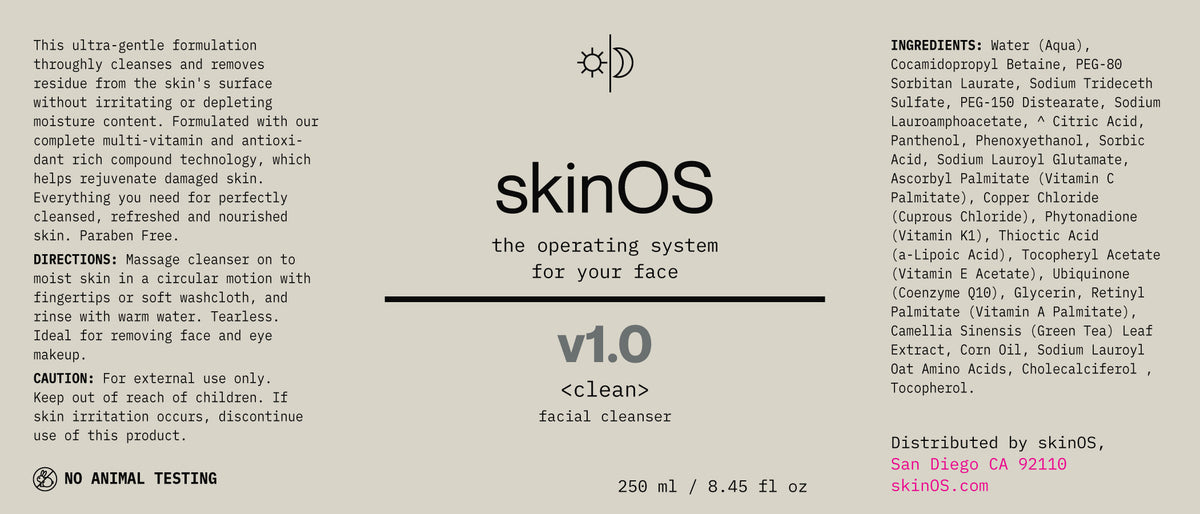
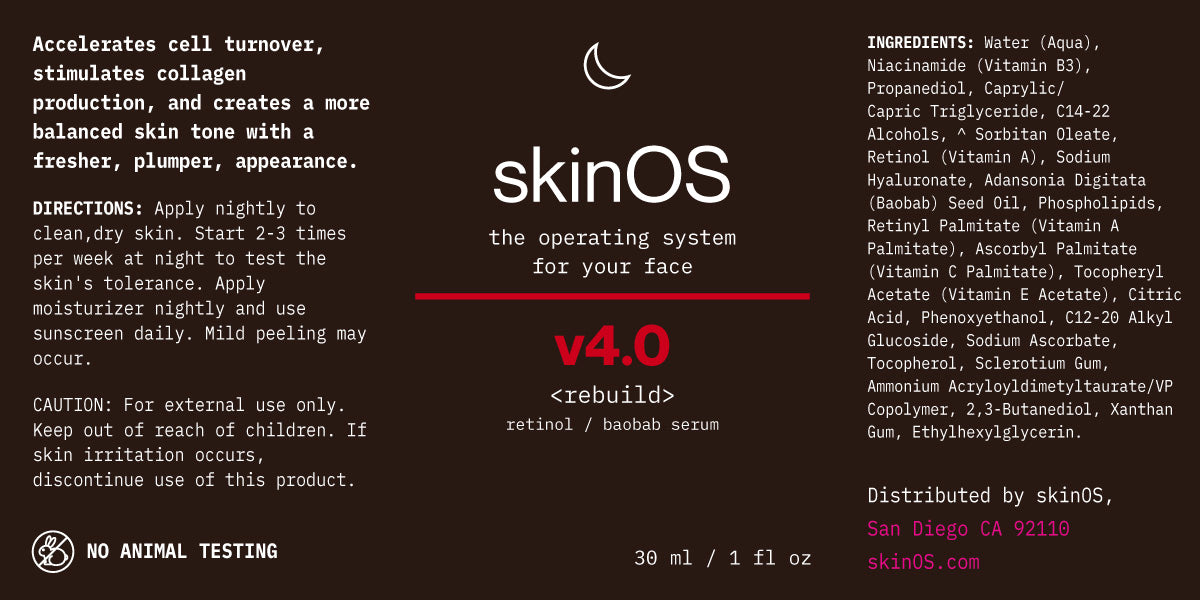
Here’s the punchline the skincare industry doesn’t want you to reach.
After decades of peer-reviewed research, thousands of clinical trials, and billions of dollars spent developing new formulations, dermatologists broadly agree on a very short list of topical ingredients that have real, repeatable, clinically validated evidence for improving skin health and appearance.
The list has five categories. Not fifty. Not twelve. Five.
Everything else on the market is either a derivative of one of these five, a supporting ingredient that enhances their performance, or marketing. This chapter is the list. Once you have it, the fog clears. You’ll be able to evaluate any skincare product on earth in about 30 seconds.
1. Retinol (Vitamin A)
We covered this in depth in Chapter 3, but it earns the top position on this list for a reason. Retinol is the single most clinically validated topical anti-aging ingredient in dermatology.
What it does: stimulates collagen I and III synthesis by activating gene transcription through retinoic acid receptors. Simultaneously inhibits MMP enzymes that destroy existing collagen. Accelerates cell turnover, which improves texture, reduces discoloration, and smooths fine lines. Increases epidermal thickness, making skin more resilient.
The evidence: the prescription form (tretinoin) was the first and remains the only FDA-approved topical anti-wrinkle treatment. OTC retinol produces comparable results over a slightly longer timeline (typically 12 weeks of consistent use). The body of evidence is enormous and spans decades.
When to use it: PM only. Retinol is photosensitive and degrades in sunlight. It also temporarily increases skin’s UV sensitivity, which is why SPF the following morning is non-negotiable.
The adjustment period: mild tingling, dryness, or flaking during the first 2–4 weeks is normal. This is called retinization. It’s temporary. Start every other night if it’s intense, then build to nightly as your skin acclimates.
If you only use one active ingredient for the rest of your life, this is the one. Everything else on this list is either supporting retinol’s work or protecting the collagen that retinol is building.
2. Hyaluronic Acid
Hyaluronic acid is not glamorous. It doesn’t rebuild collagen. It doesn’t fight free radicals. It doesn’t accelerate cell turnover. It does one thing: it holds water. And that one thing is more important than most people realize.
Hyaluronic acid is a glycosaminoglycan naturally present in your skin. A single molecule can hold up to 1,000 times its weight in water. It’s the primary substance responsible for maintaining the hydrated, plump quality of healthy skin.
The problem is that HA declines with age. By 50, most people have roughly half the hyaluronic acid they had at 20. The result is skin that looks flatter, duller, and more visibly lined. Dehydrated skin exaggerates every sign of aging. Fine lines that would be invisible on hydrated skin become visible grooves on dry skin.
Topical HA doesn’t replace your endogenous supply permanently. It supplements it. Applied to clean skin, it draws water into the outer layers and holds it there. The effect is immediate: skin looks fuller, smoother, and more alive.
The best formulations use multiple molecular weights. High molecular weight HA sits on the surface and prevents evaporation. Low molecular weight HA penetrates deeper and hydrates from within. Together, they address hydration at multiple levels.
When to use it: AM, after cleansing, before anything else. It creates the hydrated base layer that allows every subsequent product to perform better. Think of it as priming the surface.
3. Niacinamide (Vitamin B3)
If retinol is the star and hyaluronic acid is the foundation, niacinamide is the utility player who does everything well and never gets the credit.
Niacinamide is a derivative of vitamin B3. It’s water-soluble, stable, and well-tolerated by virtually all skin types, including sensitive skin. Its range of clinically documented benefits is unusually broad:
Barrier repair: Niacinamide stimulates the production of ceramides, the lipid “mortar” in the brick-and-mortar barrier structure we discussed in Chapter 4. More ceramides means a stronger barrier, which means less water loss, less sensitivity, and better protection.
Oil regulation: Clinical studies show niacinamide reduces sebum production. Not by stripping oil (which triggers the overproduction feedback loop), but by regulating the sebaceous glands directly. For men with oily skin, this is significant.
Hyperpigmentation: Niacinamide inhibits the transfer of melanin to skin cells, which reduces dark spots and evens skin tone over time.
Anti-inflammation: It reduces inflammatory markers in the skin, which helps with redness, irritation, and the low-grade chronic inflammation that accelerates aging.
Pore appearance: By regulating oil and strengthening the barrier, niacinamide can visibly reduce the appearance of enlarged pores.
One of the most valuable properties of niacinamide is that it works synergistically with retinol. It reduces the irritation potential of retinol while maintaining its efficacy. The two ingredients complement each other rather than competing, which is why well-designed routines include both.
Concentration matters. Clinical studies demonstrating efficacy use niacinamide at 4–5% or higher. Below 2%, the ingredient is present but not at a level that produces measurable results. This is one of the ways to distinguish between products that contain an ingredient for marketing purposes and products that contain it at a functional level.

4. Antioxidants (Vitamin C + Vitamin E + Ferulic Acid)
In Chapter 2, we explained how UV radiation generates free radicals that overwhelm your skin’s natural defenses and trigger the MMP cascade that destroys collagen. Antioxidants are the countermeasure.
Your skin has endogenous antioxidant systems: superoxide dismutase, catalase, and glutathione. They neutralize free radicals before damage occurs. But these systems have a capacity limit. Heavy UV exposure generates more free radicals than the defenses can handle. Topical antioxidants supplement the defenses and raise the threshold at which oxidative stress begins.
The most clinically validated topical antioxidant formulation is the combination of vitamin C (L-ascorbic acid) + vitamin E (alpha-tocopherol) + ferulic acid. This specific trio was the subject of a landmark 2005 study by Dr. Sheldon Pinnell at Duke University, which demonstrated that the three ingredients together provided synergistic photoprotection far exceeding any single ingredient alone.
This research created an entire product category. SkinCeuticals built their C E Ferulic serum on this study and sells it for $182 for one fluid ounce. It became the benchmark against which every antioxidant serum is measured.
What the combination does: neutralizes the four primary reactive oxygen species generated by UV exposure (superoxide anion, hydrogen peroxide, hydroxyl radical, and singlet oxygen). Boosts sunscreen efficacy. Stimulates collagen synthesis (vitamin C is a required cofactor). Reduces hyperpigmentation.
The key specification is concentration. The Pinnell research used 15% L-ascorbic acid, 1% alpha-tocopherol, and 0.5% ferulic acid. Below 10% vitamin C, efficacy drops significantly. Above 20%, irritation increases without additional benefit. The sweet spot is 15–20%.
One important caveat: L-ascorbic acid is unstable. It oxidizes when exposed to light and air. An antioxidant serum that has turned dark brown or orange has lost its potency. Proper packaging (airtight, opaque) and storage (away from direct sunlight) matter.
When to use antioxidants: AM only. Their primary job is to defend against UV-generated free radicals. Using them at night wastes their main function. They’re your morning defense layer.
5. SPF (Zinc Oxide)
This one is almost too simple to write about. But it might be the most important entry on the list.
UV radiation causes up to 80% of visible skin aging. We’ve spent the last four chapters explaining the mechanisms: free radical generation, MMP activation, collagen destruction, barrier damage, DNA mutation. All of it is driven primarily by UV.
SPF blocks UV. That’s it. That’s the intervention. If you do nothing else for your skin, wearing daily sunscreen will prevent the majority of the damage that makes your face age.
There are two types of sunscreen. Chemical filters (like oxybenzone and avobenzone) absorb UV radiation and convert it to heat. Mineral filters (zinc oxide and titanium dioxide) sit on the skin’s surface and physically deflect UV radiation.
Mineral sunscreen, specifically zinc oxide, is the better choice for daily wear. It provides the broadest spectrum coverage of any single UV filter, blocking both UVA (which causes aging) and UVB (which causes burning). It doesn’t break down over time the way some chemical filters do. It doesn’t absorb into the skin. And it doesn’t have the endocrine disruption concerns that have been raised about certain chemical filters like oxybenzone.
The historic complaint about zinc oxide was the white cast. Older formulations left a visible chalky film on the skin. Modern micronized and nano zinc oxide formulations have largely eliminated this problem. A well-formulated mineral SPF in 2026 is invisible on application.
A note on SPF numbers: SPF 30 blocks approximately 97% of UVB radiation. SPF 50 blocks approximately 98%. The difference between 30 and 50 is marginal. What matters far more than the number is consistent daily application. An SPF 30 worn every day outperforms an SPF 50 worn occasionally.
The best SPF is the one you’ll actually use. If the application is annoying, messy, or time-consuming, you’ll skip it. That’s why format matters. A mineral SPF stick that takes three seconds to apply has a higher real-world efficacy than a luxury SPF lotion that takes 30 seconds and leaves residue on your hands. Compliance beats potency.
The Short List
That’s the list. Five categories:
- Retinol (rebuild collagen, inhibit destruction)
- Hyaluronic acid (restore hydration)
- Niacinamide (strengthen barrier, regulate oil, reduce inflammation)
- Antioxidants (defend against UV-generated free radical damage)
- SPF (block UV radiation at the source)
Everything else you see on a skincare shelf is either a variation of one of these, an ingredient that supports one of these, or a marketing story designed to create a buying decision. There are thousands of skincare ingredients on the market. Fewer than a dozen have this level of clinical validation.
Now. You have the science (Chapters 2–3), the structural understanding (Chapter 4), and the ingredient list (this chapter). The question that remains is practical: how do you use them? When? In what order? And why does the sequence matter?
That’s Chapter 6. And it’s where this series shifts from education to application.
─────────────────────────────
NEXT CHAPTER
Chapter 6: The Order Matters: Why Sequence Is Everything →
LAST CHAPTER: